

WSCCE Spotlight Interview: Lowell Glodowski, BAC Local 1 WA/AK
Make it stand out
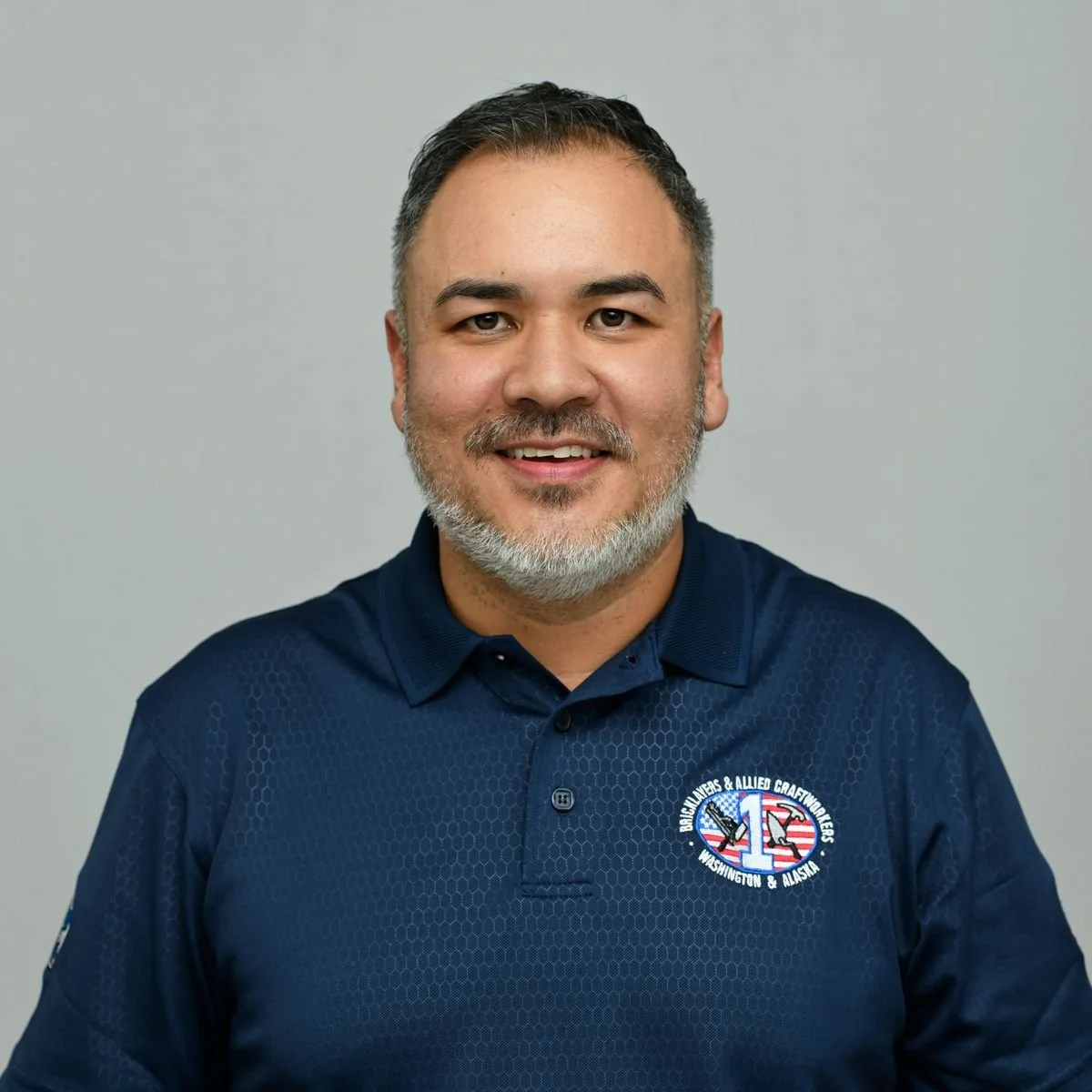
Like masonry, skills last. “The knowledge and skills you gain are something no one can ever take away from you,” says Lowell Glodowski, President of the Bricklayers and Allied Craftworkers Local 1. Read on for insight on why psychological safety matters, Lowell’s path into the industry and what the job of President entails.
Construction Center of Excellence: What led you to the construction industry and how did you choose construction?
Lowell Glodowski, President, BAC Local 1 WA/AK: I'll start with how I embarked on the path of construction. When I was 16 years old, I was shot in a drive-by shooting in Tacoma, and there was an ad on TV for Job Corps. And so I decided to take the leap of faith and get out of the gang-ridden, early 90s and late 90s Pacific Northwest, where there were a lot of gangs, especially in Tacoma.
Those unfortunate circumstances turned into a fortunate circumstance, which was being introduced to Job Corps. Through Job Corps they offered various trades, being a cook, or a maintenance person for apartment buildings. We were required to take 3 different classes for a week, basically a kind of job shadow the crafts.
I wanted to be a carpenter, first of all, but there was such a long waiting list for the carpentry program, and then they also had a Home Builders Institute, which was that maintenance type of person. I tried that out for a week.
And then there was Bricklaying, and I noticed that there was no waiting list. Home Builders Institute, there was kind of a waiting list.
And so that's where I had the opportunity to explore the different trades, and through that experience, I discovered bricklaying and quickly realized that it was my passion. I was drawn to the craftsmanship, the creativity, and the pride that comes with building something that's lasting, with your hands. From the point on, I knew that construction and specifically masonry was a career path I wanted to take. And that's where I started in the union.
In 1998, I decided to move back here to the Pacific Northwest, and I started my apprenticeship on my 20th birthday. They said, “Good luck, kid. Don't fall off the scaffolding and die, and that was my intro to construction. It was pretty rough back then, but ultimately that was just the culture. I've definitely seen a lot of improvements from the time that I've started.”
Construction Center of Excellence: Were particular things that drew you to the Bricklayers and Allied Craft Workers?
Lowell Glodowski: I think one of the things that I really appreciate about masonry is how durable and resilient our materials are. Along with the aesthetic beauty they bring to a project, in many cases, the work that we do is a finished product, something people see and admire for generations.
Seventy percent of the world's buildings are masonry, and that's the beauty behind it. I'll travel with my family and I'll be looking up, and everybody's just like, “What are you looking at?” But I'm looking at the beautiful, ornate masonry. I hope one day I get to go to Europe and really explore masonry.
There's a real sense of accomplishment in knowing you built something that will stand the test of time, and be able to go beyond the generations of my family and know that you left your mark.
Construction Center of Excellence: What all does being a president of a union entail?
Lowell Glodowski: Being the president of the union means leading and representing the membership while protecting workers' rights, wages, benefits, and working conditions. The role includes helping with negotiations, presiding over meetings, supporting apprenticeship, organizing efforts, addressing members' concerns, and working with contractors and labor partners. Serving as a public face of the union is ultimately about leadership, advocacy, and making decisions that strengthen and support the membership.
Construction Center of Excellence: What role does education and apprenticeship play at BAC Local 1?
Lowell Glodowski: Through ongoing training and apprenticeship programs, we prepare members to become highly skilled craft workers while creating opportunities for long-term careers in the union trades. Our programs focus on hands-on training, safety, certification, leadership development and upgrading skills to meet the evolving needs of the industry.
The apprentices earn while they learn, gaining real world experience along with classroom instruction from experienced instructors and journey workers. Education also helps strengthen our union by developing the next generation of leaders, improving job site quality and safety. We also ensure our contractors have the best trained workforce in the industry. The beauty of knowledge is that no one could ever take that from you.
Construction Center of Excellence: You've worked with Palmer Pathways and other pre-apprenticeships. How does pre-apprenticeship work with BAC's existing training programs?
Lowell Glodowski: I should give a shout out, we just got a direct entry pre-apprentice from Palmer Pathways that just started last week. That pipeline has been phenomenal for us.
Pre-apprenticeship helps introduce individuals to the trades by providing basic construction skills, job site expectations, safety training and exposure to the different crafts before entering a registered apprenticeship.
At BAC Local 1, these programs work hand-in-hand with our existing apprenticeship and training systems to help create a pathway into the union trades. They help prepare individuals for success before they enter into our apprenticeship program while also expanding opportunities for women, veterans, young adults, and underserved communities interested in pursuing careers in masonry and allied crafts. It's about building confidence, creating access, and developing the next generation of skilled craft workers.
Construction Center of Excellence: What's the importance of psychological safety, both in the workplace and in the classroom? And how has your work engaged in psychological safety?
Lowell Glodowski: Thank you for bringing this up, because this is one of the things that I have a passion for, this culture shift. I think it's so important.
I echoed that in our chapter meeting last night about culture and how important it is, attracting the younger generation. So psychological safety is extremely important, both on the job site and in the classroom, because it creates an environment where people feel respected, supported, and comfortable speaking up. In construction, that can mean asking questions, reporting safety concerns, admitting mistakes, or reaching out for help without fear of embarrassment or retaliation. In a training environment, it also allows apprentices and members to learn, grow, and build confidence.
At BAC Local 1 and the Training Center, we work to make psychological safety part of our culture by promoting mental health awareness, suicide prevention training, peer support resources, and open conversations about well-being.
We've partnered with programs like American Foundation for Suicide Prevention. I sit on the local advisory board and we also have the Construction Hike for Hope that we launched last year and it's coming up this year as well. We also partnered with VitalCog and the University of Colorado on an industry wellness initiative to help reduce stigma and remind our members that it's okay to speak up and ask for support.
At the end of the day, strong cultures are built when people know they are valued not just for the work they produce, but as human beings.
I have unfortunate news that one of our members took their own life in March. My friend, who I helped navigate as an apprentice, and also 5 other of my friends who have taken their own life, so it's been really hard on me to get through it, but I just don't want them to die in vain. That's one of my legacies that I want to leave behind, being okay with not being okay, and then also creating pipelines for people to have that opportunity to talk and hopefully shift the culture towards being more inclusive.
A lot of the times we talk about, “Oh, my shoulder, I'm going to go get it worked on.” But nobody talks about, hey, I'm a little bit shattered here. Sorry about getting choked up there, but I was just thinking about all my friends there.
Construction Center of Excellence: Thank you for that. Is there anything we missed, or didn’t ask about?
Lowell Glodowski: I'm just really thankful for the opportunity, and I'd like to say thank you for the opportunity to share a little bit about the industry and what we're doing at BAC Local 1. Construction and the union trades have changed my life. I'm passionate about helping create opportunities for the next generation.
One thing I always try to emphasize is that our industry is about more than just building structures, it's about building people, careers, and community, through apprenticeship, mentorship, and strong support systems.
We can help individuals build lasting careers while also addressing important issues such as mental health, workforce development and jobsite safety. The beauty of the trades is that the work we do leaves a legacy, and the knowledge and skills you gain are something no one can ever take away from you.