
Women in construction week spotlight: Kalin Magruder
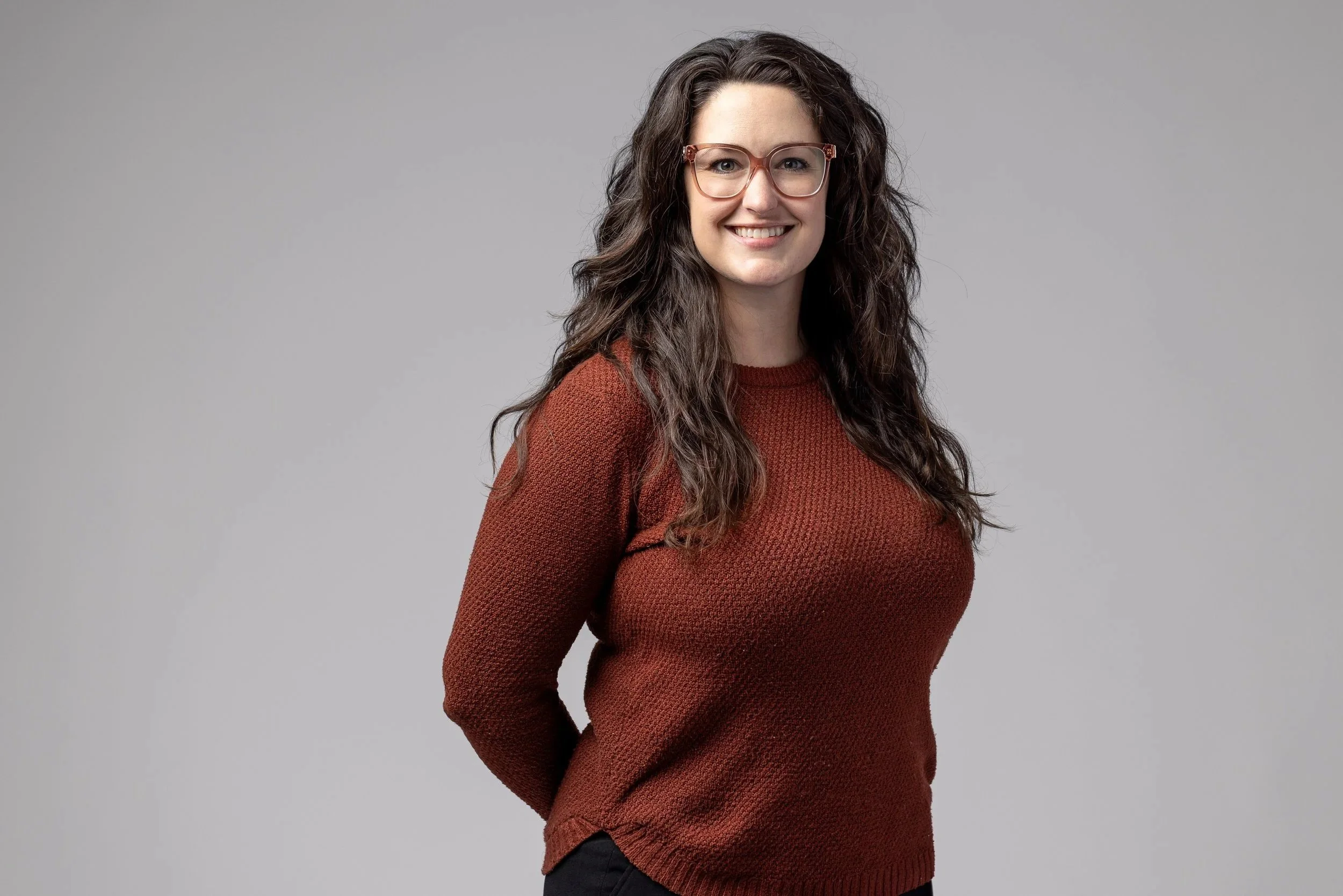
The Construction Center of Excellence recently sat down with Kalin Magruder, Vice President and Senior Project Manager at Sellen Construction, to find out about her pathway into construction, what a day in the industry looks like, and what she sees as essential for success in an ever-changing industry.
In this interview, Kalin explains why “show me your thought process” matters more than having the right answer, why the industry should sell students on both the opportunity (including the money) and the mobility available in construction, and why she’s optimistic about increased inclusivity and the continuing need for construction professionals.
Construction Center of Excellence (CCE): As a Vice President and Senior Project Manager at Sellen Construction, what do you do? What does an average day look like? What does a not-average day look like?
Kalin Magruder: I primarily work in special projects or sustaining work, so I am managing or supporting multiple different projects at multiple different stages at any given time. Every day looks a little different and usually consists of multiple meetings – anything from pre-construction or estimating and bidding efforts, progress and status meetings on projects in active construction or discussions around business development and strategy planning.
My baseline role is managing project performance from inception to completion, which includes close collaboration with clients, owners’ representatives, architects, subcontractors and our internal teams – managing the scope, budget and schedule of projects. I manage a handful of smaller projects myself and I support a team of people that are managing active projects, being a support system for them, when questions or roadblocks come up, or just being a sound board on next steps through whatever comes up on a project.
Additionally, in partnership with my superintendent, we support lot of clients through pre-construction efforts for early scheduling, estimating, and constructability review of projects to help kick the project off on the right foot. A big part of my job is maintaining client relationships. To me, that means I’m showing up for our clients in support of whatever they need – it may be a tough conversation around why something they want may not work, but if we can help facilitate that conversation early so adjustments or alternate plans can be made, it’s still a success.
A not-average day is probably one where I have a block of time with no meetings and I can jam out some work!
CCE: Do those projects make sense for you to manage because of a specialized set of skills that you have, because of an interest, or because of something else?
Kalin Magruder: Capacity is most of it. I'll typically manage smaller, quick-hitter projects, because I've already been immersed in the pre-con or estimating process. It also depends on my team’s capacity. If they are buried on other projects, I’ll take on the smaller ones but we’re always looking for good opportunities for career growth and exposure. Specifically for Project Engineers, the smaller, quicker projects are perfect for first time exposure to project management tasks. Project assignments are heavily based on capacity and what makes the most sense for the team.
CCE: What first got you interested in the construction industry? Was there a moment early on in life, or something you look back on that built your interest in the work?
Kalin Magruder: Construction was something I grew up around. My dad was a foundation contractor, and he always had plans at the house. When I was younger, I just liked looking at the elevations and floor plans – imagining what the house would look like - but as I grew up, I worked for him onsite, doing layout, deliveries, site cleanup, flagging, cutting and bending rebar or on pour days floating and smoothing the footings and walls. He was also a small-scale developer – buying a plot of land and building a house to sell, which the whole family helped out with, from pouring foundations to finish work.
The construction industry I had exposure to was mostly small commercial and residential projects, so I had no idea of the opportunities available within the larger commercial or industrial realm.
I went to college up at Western Washington University, and I went through the Huxley College of the Environment. Being from Bellingham (we all have a bit of inner hippie), I was drawn to green building and sustainable development practices. Unfortunately, I graduated in 2009 toward the bottom of the recession, and job opportunities were challenging to come by – even more so in green building.
I was lucky enough to get a job at an owner’s rep firm when I graduated, and I quickly realized the industry was significantly larger than I had ever imagined. I was able to see exactly how much went into a construction project and the substantial “behind the scenes” effort required to make a project successful. I was exposed to negotiations and budget management discussions, compliance conversations (compliance with funding requirements as well as building codes), collaborative problem solving when unforeseen conditions popped up and so much more – I got hooked!
One of my favorite projects I worked on was the King Street Station renovation, where Sellen was the General Contractor. I saw how the team worked together in solving for unforeseen conditions and challenging obstacles (and there were many!) and I thought, “I want to work on the GC side, and I want to work for Sellen.” It was such a great team and such an incredible project, and I wanted the opportunity to be an active member of something like that. However, in that same experience, I quickly realized that I didn't have the knowledge or understanding of the breadth and depth and details of construction— so I decided to start from the “ground up” in the industry.
To me that meant getting experience from the subcontracting side of things – so I went to an electrical contractor, where I got experience in the nitty-gritty of how to manage work from a subcontractor perspective. I learned how to read plans, how to put together estimates, how to send in and post RFI’s, how to track change orders, safety planning and invoice tracking. We primarily did lump sum, hard bid work (I was responsible for faxing in our bids!), which is a whole ballgame. Electrical touches everything, so it was really great experience and exposure to the details and importance of the trades.
From there I went to another general contractor, where I learned to coordinate multiple different trades, how to put together an estimate for all scopes on a project, and then manage and track the budget. I learned the value and importance of safety and my role in safety leadership. I got exposure to the constant pivots of the industry and built some pretty cool projects before I made my way to Sellen and worked my way up to my current role.
In some ways, I feel like I fell into this industry, I never imagined this is what I would be doing when I was a kid, or even young adult. But I kept saying yes to opportunities and seeking out experiences or openings that peaked my interest and gained exposure. Even though some days are frustrating and some problems are really challenging, I love what I do.
CCE: What do you think is missing in construction education today? When you see new people come into your company, what do you wish that they knew?
Kalin Magruder: This is the question that is frequently asked, especially from the education sector, and I get it – teachers and educators want the tangible thing that they can teach kids.
It’s difficult to answer, because the industry can teach the hard skills – those can be learned with hands on experience. But to me, it's really the soft skills, with a key one being proactiveness – being able to try to figure things out and problem-solve when you get stuck, identifying next steps, trying something out before you raise your hand and say, “Hey, I don't know what I'm doing.”. If I can at least see your thought process and what you were trying to do, I can work through next steps a lot easier than if someone stops the minute they hit a hurdle and is like, “I don't know what to do next.”
Another important one is responsibility – the responsibility of showing up in the best way that you can every day, having respect for the people that are training you and investing their time and energy in you. Showing up on time, prepared, and willing to learn goes such a long way.
No one expects you to know everything or be perfect. I would so much rather have the person ask the question – because I know they don't know everything, I know that there are questions, I know there's confusion, I can tell when something's not connecting. If you sit silently or just say “Yeah, I totally know what you're talking about” I lose trust.
In every different role, every different team, every different company, I've come in and had imposter syndrome, where it's like, “Oh, they're hiring me for this role, I should know exactly what I'm doing, and I should know all these things.”. Learning to get over that ego part of it, the “No, I don't know everything, but I'm still valuable,” and showing up with that value every day, that's huge.
CCE: What are the best ways to generate interest in construction opportunities among young people and students?
Kalin Magruder: To be honest, I think it's hitting them with the money. This is a lucrative industry ripe with opportunities. Just because you start on one path doesn't mean you're locked into that forever. You can jump around from the field to the office or vice versa. Jumping trades is a little bit more challenging, depending on which path you go. But within any trade career path, the sky's the limit for how hard you want to work and how you want to apply yourself.
The thing that I always tell students and people interested in the industry is, in a world of outsourcing, or AI, where people are trying to constantly do more with less, including human power, construction will never be able to be outsourced.
You can prefab, you can do all these things to try and improve hours in the field or the office, but at the end of the day, you still need a skilled human that can problem-solve and put things together – because every project is different, different site conditions, different use needs from the client, different constraints – and each of those require different solutions.
We’re constrained with land and space to build new buildings. It takes a significant amount of money and time to build new ground up, and there's so much of both already invested in existing buildings. Even if you can find opportunities to use technology or prefabricate, you’re still going to be dealing with so many existing conditions that it’s going to take that skilled human mind to connect the dots and put it together.
I feel like construction is a very human experience, even though it's obviously centered around a tangible work product – the success of a project is very much determined by who the people are that are putting it together, how they're working together, and how they’re able to solve problems.
CCE: Is there anything else you'd like to share about the industry, or your role, or the future of construction industry?
Kalin Magruder: The thing I'm most looking forward to is how the makeup of the industry is going to continue to evolve, especially in terms of inclusivity and openness to people from all walks of life, and the amazing new ideas that will bring. In the time that I've been in the industry, there has already been meaningful change. I feel very fortunate to live and work in the Pacific Northwest, where it tends to be more progressive, but I have never felt like I wasn’t welcome or didn’t belong in the industry. To me that’s real progress, and it’s only going to continue.
My husband is a union electrician, and when he got in the industry, the way that he was treated as an apprentice is very different than how he treats his apprentices now. It's moving away from that gruff, berating kind of environment to one of training and inclusivity, like, “Let's help you figure this out”. That doesn’t mean expectations are lower. You still have to put in the effort, take responsibility, problem-solve, and be proactive. But if you’re willing to learn and show up ready to work, there’s absolutely a place for you. That cultural shift toward accountability paired with support is what makes me genuinely optimistic about the future of the industry.